Welcome to StudentHerb, Here you can read amazing blogs about world, science, history and crazy facts.We regularly keep uploading posts so keep reading everyday, Thank you.
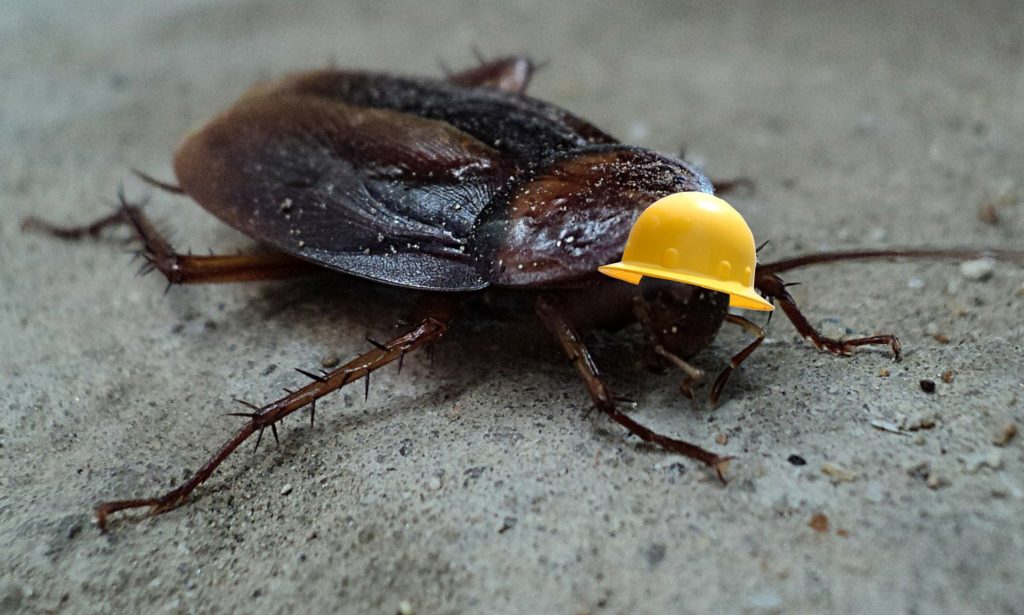
In 1945 as the Second World War neared its end, two atomic bombs, the likes of which the world had never seen, were dropped on the Japanese cities of Hiroshima and Nagasaki. When the carnage was later dissected, legend tells that the sole survivor was a tiny insect known as a cockroach.
Subsequently, tests were carried out on the insects to see if their radiation defences were as tough as first thought. The two bombs dropped at the end of the war had a strength of around 10,000 radon units. When exposed to this level during the experiment, the roaches, as predicted, survived. When the dose was upped to 100,000, none survived. We can ‘only’ withstand 800 radon units.
The science behind the ‘roaches hardy ability is that they have extremely simple and slow cell cycles which the radiation finds difficult to affect. Cells are at their weakest to radiation when they are dividing and as this happens much less frequently in cockroaches, they have a higher tolerance.
Cockroaches are invincible to a nuclear bomb then? Well not quite. The invertebrates would be disintegrated in the explosion and would fry in the heat of the blast. Additionally, the strength of current nuclear warheads is much stronger than the 1945 bombs so they would be tested much more in present day conditions.
So, all that stuff about cockroaches ruling the Earth after the nuclear apocalypse? Yeah it’s kinda true…
Identifying spring buds. BY barry allen · 15/03/2021 As the flowering buds on trees begin to appear, here’s how you can tell them apart A plant’s buds act as a shield for the delicate flowers inside. Flowers of different shapes, sizes and forms come with individual and distinct protection. Throughout winter these buds remain closed and dormant, surviving the cold until their time comes to thrive in the spring, making a vibrant emergence from their compact casing. While it’s usually easy to distinguish a species from its distinct flowers, buds can have more subtle differences. This visual guide to the more common tree buds should help you identify them. Ash (Fraxinus excelsior) Ash trees are identifiable by their two tiny, sooty black buds either side of a larger bud. (Image credit: Future PLC/ The Art Agency/ Sandra Doyle) Beech (Fagus sylvatica) Beech buds are long and thin, with sharp points and spiky cases, and are a coppery-brown colour. (Image credit: Futur...
this blog is the best.
ReplyDelete