BY·Barry Allen
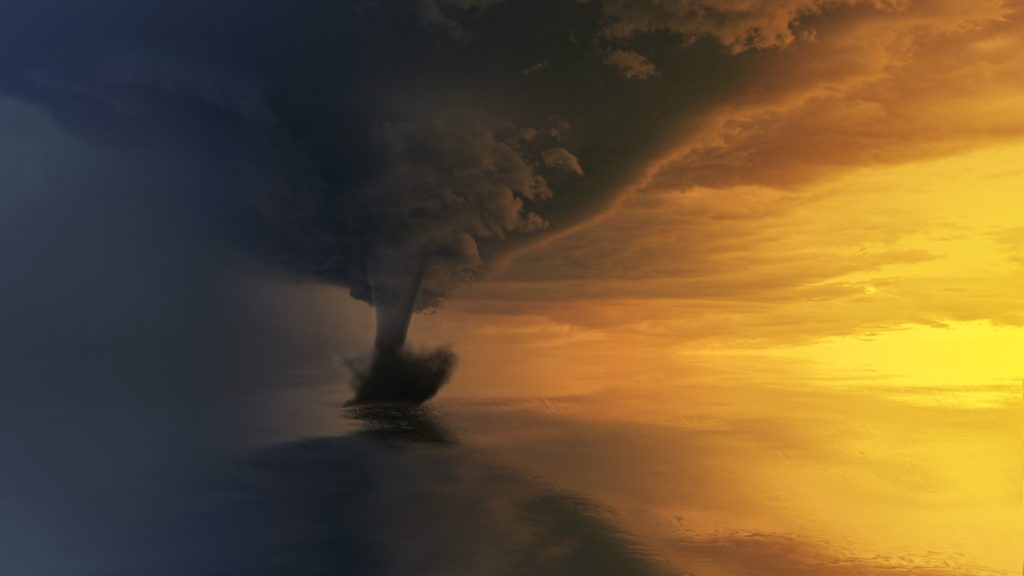
1. Twisters are measured on the Fujita Scale
Tornadoes are rated on the ‘Fujita Scale’ which measures their intensity. ‘F5’ is the highest end of the scale and is described as ‘incredible damage’ with houses levelled off foundations and cars and trees flung in the air. A twister of the is magnitude is between 420km/h (261mph) to 511 km/h (318 mph).
2. Tornadoes have touched down everywhere but Antartica
Tornadoes have hit every continent on Earth exception of one. There are no records of a twister landing on the southernmost continent. That’s because it’s not possible. The freezing atmospheric conditions prevent them from forming.
3. They may be powerful but they are no match for their solar equivalents
Our twisters on Earth are pretty impressive but are no match for the 70,000km (43,496mi) tall beasts on The Sun.
4. The worst tornado in history was in 1925
Perhaps the worst ever tornado was the Tri-state tornado on 18 March 1925. The deadly twister killed 695 people and injured 2,025 as it careered its way through Missouri, Illinois and Indiana.
5. Or was it the most deadliest?
A 1989 tornado in Bangladesh was quite possibly more destructive than the Tri-State with 1,300 dying as a cause of the twister. A reported 80,000 people were left homeless with the slums the most affected areas. Bangladesh is one of the worst affected areas by tornadoes on Earth along with the USA and Canada.
- Get link
- X
- Other Apps
- Get link
- X
- Other Apps
Comments
Post a Comment